Repiping and Water Line Replacement in Walnut Creek
Repiping in Walnut Creek means replacing the water supply pipes in your home, usually old galvanized steel or tired copper, with new copper or PEX, so you get steady pressure and clean water again. We have done this work across Contra Costa since 1993, from single runs under a kitchen to whole-house repipes in mid-century ranch homes. We also replace water mains from the meter to the house, swap pressure-reducing valves, shutoffs and hose bibs, and repair irrigation lines. Call (925) 887-6347, a real person answers 24/7, and the estimate is free.
- Open 24 hours, including holidays
- Licensed and insured since 1993
- Written price before any work starts
- Senior discount available
Water line and repiping services in Walnut Creek
We handle every pipe that carries clean water on your property: the main from the meter to the house, the pipes inside the walls and under the floor, the valves that control them, and the lines that feed your yard. If water is moving through it before it reaches a fixture, it is our job.
Most calls start with one complaint. The shower barely runs when someone flushes. The water comes out brown after a weekend away. A pinhole leak showed up in the ceiling. Our job is to find out whether that is a single bad section or a sign that the whole system is at the end of its life, and to tell you plainly which one it is.
Whole-house repiping
All supply lines replaced, hot and cold, from the main shutoff to every fixture. The fix for galvanized pipe that is closing up inside, or copper that keeps springing pinhole leaks.
Partial repipes
One bathroom, the kitchen run, or a section under the house that keeps failing. Sometimes that is all a home needs, and we will say so.
Water main replacement
The buried line from your meter at the street to the house. When it leaks, you often see a soggy strip of lawn or a meter that spins with everything off.
Copper, PEX and PVC
We install and repair copper piping, PEX, and PVC water lines, and we will explain which one fits each part of your home and why.
Valves and regulators
Pressure-reducing valves, ball valves, gate valves and main shutoffs. A stuck valve is a problem you only discover during an emergency, so we test them.
Hose bibs, pumps and irrigation
Outdoor spigots and hose bibs, water pumps, and irrigation supply lines, plus water leak repair inside and outside the house.
If you are not sure where the problem is, start with our electronic leak detection service. Finding the leak first keeps the repair small.
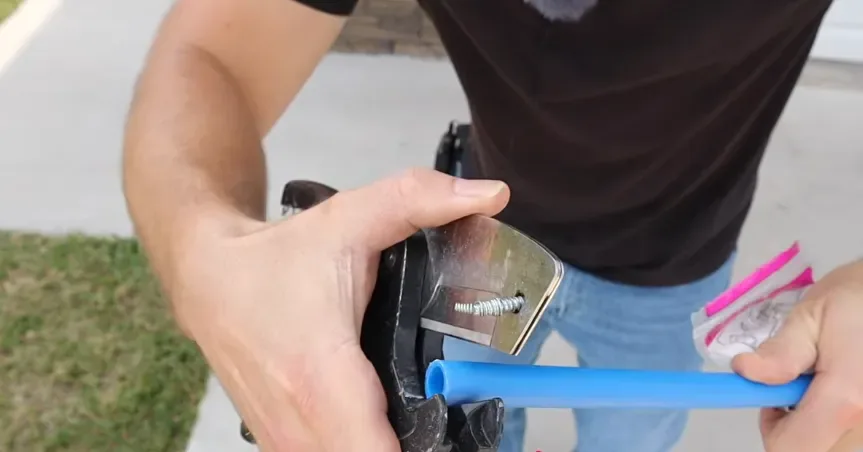
Signs your water lines need repair or a repipe
The clearest signs are low pressure throughout the house, rusty or discolored water, and repeat leaks in different spots. One leak is a repair. Three leaks in a year usually means the pipe itself is failing everywhere.
| What you notice | What it usually means | How urgent |
|---|---|---|
| Weak pressure at every fixture, worse upstairs | Galvanized pipe narrowed by internal rust, or a failing pressure-reducing valve | Plan soon, not an emergency |
| Brown or orange water, especially first thing in the morning | Corrosion inside galvanized steel supply pipe | Plan soon |
| Pinhole leaks in copper, green stains at fittings | Copper wearing thin from the inside | Repair now, consider a repipe if it keeps happening |
| Water meter moving with everything turned off | A leak somewhere after the meter, often the main to the house or a toilet | Call this week, your bill is running |
| Soggy patch in the yard, or a hissing sound near the foundation | Leak in the buried water main or an irrigation line | Call now |
| Banging pipes, dripping relief valve, faucets that spit | Pressure too high, often a failed pressure-reducing valve | Call soon, high pressure stresses everything |
| Main shutoff will not turn or does not stop the water | Seized gate valve | Fix before you need it |
| Water spraying, ceiling dripping, floor flooding | Burst pipe or failed fitting | Emergency, shut off water and call |
Why so many Walnut Creek homes need repiping
Walnut Creek grew fast in the 1950s and 1960s. The population went from 9,903 in 1960 to 39,844 in 1970, and a lot of the homes built in that boom were plumbed with galvanized steel supply pipe. That pipe rusts from the inside, and after decades the opening gets so narrow that pressure drops and the water picks up rust.
We see it in Parkmead, Larkey Park, Walnut Knolls, Saranap and plenty of other neighborhoods from that era. Some of those houses were partly repiped over the years, so you can end up with a patchwork: copper in the remodeled kitchen, galvanized still running to the back bathroom, and a dielectric joint somewhere in the crawlspace where two metals meet. A good inspection maps all of it before anyone quotes a price.
Long ownership, original pipe
California's Proposition 13 keeps the assessed value of a home rising at most 2% a year until it sells, so many owners stay put for decades. That is great for the tax bill, but it means a lot of houses in town still have the plumbing they were built with. If you have owned your home since the 1980s and never repiped, it is worth having someone look under the house.
Two water districts, one town
Walnut Creek is split between East Bay Municipal Utility District (EBMUD) and Contra Costa Water District (CCWD) depending on your address. EBMUD water comes mainly from the Mokelumne River watershed and is soft, in the range of 1 to 7 grains per gallon. CCWD draws mainly from the Delta through the Contra Costa Canal with blending at Los Vaqueros Reservoir, and its quality varies by season, with higher salinity in summer. Your water source is one of the things we consider when we talk about pipe material, and it is worth knowing which district bills you before any work on the main.
Hills, pressure and freezing nights
Homes at different elevations on the slopes around Mount Diablo, Shell Ridge and the Tice Valley can see very different street pressure. Some need a pressure-reducing valve, and those valves wear out. And while our winters are mild, frost is common on winter mornings and the record low is 17F. During the December 2022 freeze warning, the advice was to wrap or cover exposed outdoor pipes. Hose bibs and above-ground irrigation lines are the first to suffer.
Who owns the pipe: EBMUD and CCWD meter responsibility
In EBMUD territory, the district fixes leaks on the street side of the meter and the meter itself, and everything on your side of the meter is yours. That includes the water main from the meter to the house, your irrigation lines, and all indoor plumbing.
EBMUD says it repairs leaks on its water meters and water mains, and that it is also responsible for the threads on the customer's side of the meter. Any pipe repair past that point is the property owner's job. If you see water coming from the street side of an EBMUD meter, EBMUD asks you to call its emergency dispatch line at 1-866-403-2683 and press 1.
For homes served by CCWD, call the district to confirm where its responsibility ends at your address before you assume either way. We could not confirm CCWD's exact dividing line from its own site, so we will not guess for you. What we can say is that the buried pipe running from the meter box to your house is the line homeowners most often end up replacing, and it is one we replace regularly.
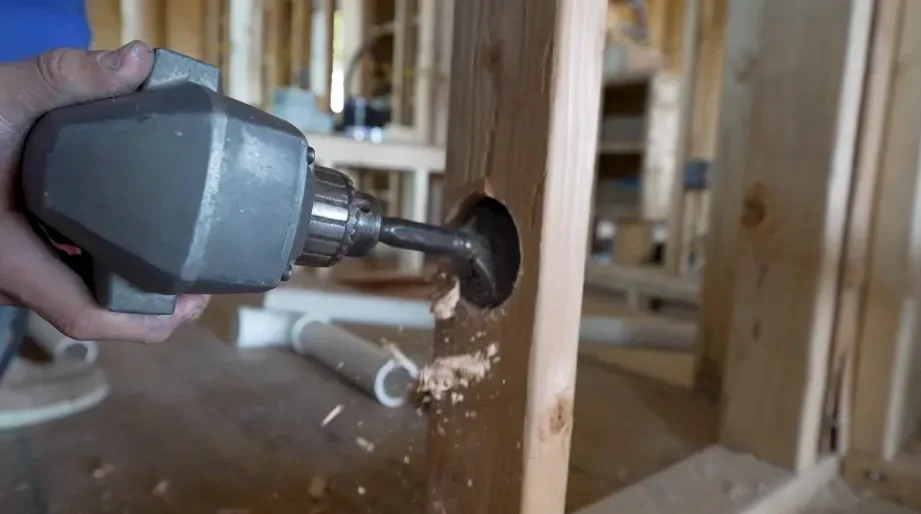
Copper vs PEX vs PVC for Walnut Creek water lines
Copper and PEX are the two main choices for supply lines inside the house, and PVC is mostly used for buried cold-water lines and irrigation. Each has a place, and many repipes use more than one.
| Material | Where it fits best | Strengths | Trade-offs |
|---|---|---|---|
| Copper | Exposed runs, near the water heater, homes where you want a traditional install | Long track record, rigid, handles heat well, looks neat where you can see it | More labor to install, more fittings, more wall openings in a finished house |
| PEX | Whole-house repipes in finished homes, long runs through attics and crawlspaces | Flexible, so it snakes through walls with fewer openings and fewer joints | Must be kept out of sunlight and protected from damage, needs proper support and fittings |
| PVC | Buried cold-water mains, irrigation supply | Does not rust, fine for underground cold water | Not for hot water inside the house, can crack if hit by a shovel or roots |
| Galvanized steel | Nowhere new | None for new work | Rusts inside, loses pressure, discolors water; this is what we usually replace |
Our honest take: for a lived-in house where you want the fewest holes in the drywall, PEX is often the practical choice. Where pipe stays exposed in a garage or crawlspace and you like the look and feel of metal, copper is great. For the main from the meter, the right answer depends on depth, soil, and what is already there. We will lay out the options with prices for each so you can choose, not push you toward one.
How a whole-house repipe works with us
A repipe is a planned project, not a surprise. We inspect first, give you a written price, then work room by room so you are without water for as little time as possible.
- You call, a person answersTell us what you are seeing: low pressure, leaks, rusty water. We set a time that works for you.
- Look under and around the houseWe trace the main, check the crawlspace or slab, test pressure, and find every valve and every type of pipe in the system.
- Written price and planYou get a free estimate in writing, with material options, what walls need openings, and how long water will be off.
- Permits and protectionWe handle the permit with the right office, city or county, and cover floors and furniture before we start.
- New pipe, new valvesNew supply lines run to every fixture, with new shutoffs where they make sense. Old pipe is abandoned or removed as agreed.
- Pressure test and walk-throughWe test the system, flush the lines, check every faucet and toilet with you, and leave the work area clean.
Patching drywall after a repipe is a separate trade. We will tell you up front how many openings to expect and where, so you can plan for it.
Pressure-reducing valves, ball valves, gate valves and hose bibs
Valves are small parts that protect the whole system. A failed pressure-reducing valve can push high pressure into every fixture, and a seized shutoff can turn a small leak into a flooded room.
Pressure-reducing valves (PRVs)
The California Plumbing Code calls for an approved pressure regulator, with a strainer ahead of it, where static water pressure in the supply piping exceeds 80 psi, and it calls for an expansion tank on the cold water line downstream of the regulator. If your faucets spit, your toilet fill valves keep failing, or the water heater relief valve drips, we will put a gauge on a hose bib and check. When a PRV fails it often fails high, so the house quietly gets more pressure than it should.
Ball valves vs gate valves
Older homes often have gate valves at the main and under fixtures. They work by lowering a gate with a multi-turn handle, and after years of sitting they tend to seize or not shut off fully. A ball valve turns a quarter turn and is much easier to close in a hurry. When we repipe, or when a shutoff fails, we usually recommend a ball valve at the main.
Hose bibs and spigots
Outdoor hose bibs drip, crack in a hard frost, or loosen from the wall. We repair and replace them, and if you want another spigot by the garden or the side yard we can add one. Our outdoor plumbing team handles the rest of the yard too.
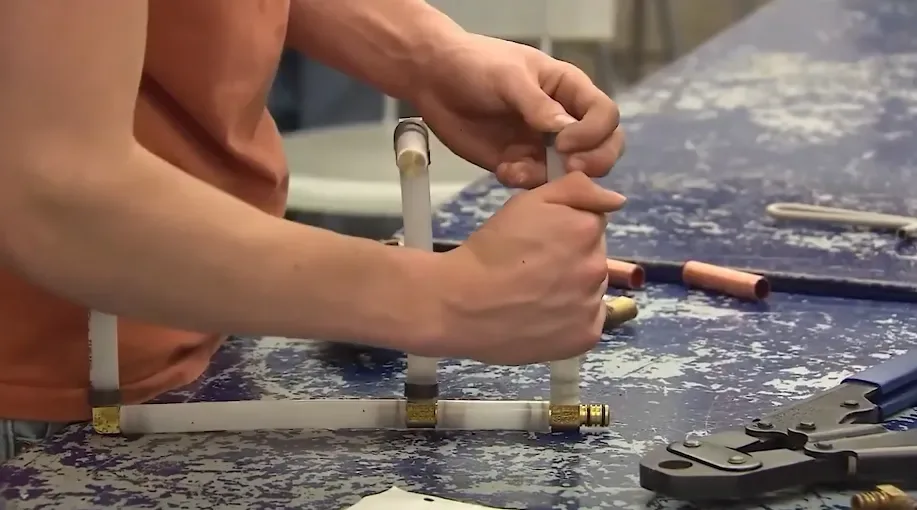
Water main, water pump and irrigation line repair
A leaking water main usually shows up as a wet strip in the lawn, a sinkhole near the front walk, or a meter that keeps turning. We locate the leak, then repair the section or replace the line from the meter to the house.
Irrigation supply lines are their own category. They sit shallow, they get hit by shovels and roots, and EBMUD notes that wet or unusually green spots are a common clue. EBMUD also suggests making sure the irrigation controller's backup battery works so valves close during a power outage. We repair irrigation supply lines and the valves that feed them, and we add backflow prevention devices where they are needed.
Water pumps come up on hillside properties, for booster needs, and with some outdoor systems. We install and repair them, and we will tell you if a pump is solving the right problem or covering for a pipe that is too small or too clogged.
EBMUD and CCWD each offer residential lawn conversion rebates of up to $2,000. If you are replacing a lawn anyway, that is a good time to rethink the irrigation supply line too.
Permits and code for repiping in Walnut Creek
A repipe or water main replacement generally needs a permit, and which office you deal with depends on where the house sits. Inside city limits it is the City of Walnut Creek building office at 1666 North Main Street, (925) 943-5800. Unincorporated areas like Saranap go through Contra Costa County.
California's water-conserving fixture law also matters during a remodel. Under Civil Code section 1101.4, for alterations or improvements to a single-family home built on or before January 1, 1994, the permit applicant must replace noncompliant fixtures with water-conserving ones as a condition of final permit approval. Noncompliant means toilets over 1.6 gallons per flush, showerheads over 2.5 gallons per minute, and interior faucets over 2.2 gallons per minute. If your repipe triggers a permit on an older house, plan on checking those fixtures too.
We are a California licensed C-36 plumbing contractor, licensed and insured. You can verify any plumber's license, bond and workers' comp status at cslb.ca.gov before you hire.
What affects the cost of repiping
The biggest cost drivers are the size of the house, how many fixtures it has, whether the plumbing runs through a crawlspace, attic or slab, and which material you choose. We give a free written estimate after we see the house, because a number over the phone would only be a guess.
- Number of bathrooms, the kitchen, laundry and outdoor spigots to reconnect
- Access: a roomy crawlspace is far easier than a slab or a low attic
- Copper, PEX or a mix, and how much of the pipe stays exposed
- How many wall and ceiling openings the route requires
- Whether the water main from the meter is included
- New valves, a pressure-reducing valve and expansion tank if needed
- Permit fees and inspection scheduling with the city or county
We offer a senior discount, and we accept Mastercard and Visa. If you are in Rossmoor, ask your mutual first which pipes are yours and which belong to the building, since much of Rossmoor is co-ops and condos with shared walls.
What you can do yourself, and when to call
You can safely find and test your main shutoff, check your meter for leaks, and look for rust or green crust on exposed pipe. Cutting, soldering or crimping pipe, replacing a PRV, or digging up a main is work for a licensed plumber.
- Find the main shutoff now and make sure everyone in the house knows where it is
- Turn it off and back on once a year so it does not seize
- Do the meter leak test: all water off, watch the leak indicator
- Look at exposed pipe in the garage, under sinks and in the crawlspace for rust, green stains or damp spots
- Cover or wrap outdoor pipes and hose bibs when frost is forecast
- Disconnect garden hoses in winter so water does not sit in the bib
Call us when you see repeat leaks, rusty water that will not clear, a pressure problem you cannot explain, or a shutoff that will not move. It is cheaper to plan a repipe than to repair water damage after one more pinhole leak.
Why Walnut Creek calls us for repiping
We have been a family business serving Contra Costa and Alameda Counties since 1993, working out of our North Main Street shop. Owner Mo Williams is a Bay Area native who learned plumbing and construction products and installation at Simon's Hardware in Walnut Creek and Home Depot in Concord before building the business.
We are open 24/7, a real person answers the phone, and we hold a 4.7 Google rating from 251 reviews as of October 2026. One customer wrote that Kevin solved their problem and fixed their water leak in a timely manner. That is the goal on every job. We are members of the Walnut Creek Chamber of Commerce and Visitors Bureau and PHCC, and BBB Accredited with an A+.
Related plumbing services
Water lines connect to almost everything else in the house. These are the services that most often go hand in hand with a repipe.
Leak detection
Electronic and acoustic tools to find a hidden leak before we open a wall. See leak detection in Walnut Creek.
Water heaters
A repipe is a good time to check the heater, its strapping and its connections. See water heater service.
Whole-house inspection
Not sure if you need a repipe at all? Start with a whole-house plumbing inspection.
Gas lines and piping
We also re-pipe gas lines. See gas line repair and installation.

A family business led by Mo Williams since 1993
We are a Walnut Creek family business run from our North Main Street shop. Owner Mo Williams grew up in the Bay Area and learned plumbing products and installation from the inside out at Simon's Hardware in Walnut Creek and Home Depot in Concord. His wife Ann runs the books as CFO. We're rated 4.7 on Google from 251 reviews (October 2026). Meet Mo


Frequently asked questions
How do I know if I need a whole-house repipe or just a repair?
If you have one leak in otherwise healthy pipe, a repair is usually enough. If you have galvanized steel supply pipe, low pressure throughout the house, rusty water, or repeat pinhole leaks in different spots, the pipe itself is failing and a repipe is usually the better value. We look under the house, test pressure and check several sections before recommending either, and we put the recommendation in writing.
Is PEX or copper better for repiping a Walnut Creek home?
Both are good choices, and the best one depends on the house. PEX is flexible, so it runs through finished walls with fewer openings and fewer joints, which often makes it the practical pick for a lived-in home. Copper is rigid, handles heat well and looks clean where pipe stays exposed. Many repipes use a mix. We price both so you can compare.
Who is responsible for the water line from the meter to my house?
In EBMUD territory, the homeowner is. EBMUD repairs leaks on the street side of the meter and the meter itself, including the threads on the customer side, while any pipe past that point is the property owner's job. If you are a CCWD customer, call the district to confirm where its responsibility ends at your address. Either way, we repair and replace the line from meter to house.
Why is my water rusty or brown in an older Walnut Creek house?
The most common cause in mid-century homes is galvanized steel supply pipe rusting from the inside. As the rust builds up it also narrows the pipe, so low pressure often comes with it. Many Walnut Creek homes were built in the 1950s and 1960s boom, when galvanized was common. Rust that keeps coming back after the lines run clear is a strong sign a repipe is due.
Do I need a permit to repipe my house in Walnut Creek?
A repipe or water main replacement generally requires a permit. Inside city limits that goes through the City of Walnut Creek building office at 1666 North Main Street, (925) 943-5800. Unincorporated areas like Saranap use Contra Costa County. We handle the permit and inspection scheduling as part of the job, and we will tell you which office applies before work starts.
What does a pressure-reducing valve do and how do I know mine failed?
A pressure-reducing valve lowers street pressure to a safer level for your home. The California Plumbing Code calls for one where static pressure exceeds 80 psi. Signs of a failed valve include banging pipes, faucets that spit, toilets that keep running, and a dripping water heater relief valve. We test pressure with a gauge at a hose bib and replace the valve if needed.
How long will I be without water during a repipe?
It depends on the size of the house and the route the new pipe takes, so we give you a specific plan in the written estimate. We work in sections and reconnect fixtures as we go so you are without water for as little time as possible. We will tell you in advance which days and hours the water will be off so you can plan around it.
Should I replace my gate valves with ball valves?
Usually yes, especially at the main shutoff. Older gate valves use a multi-turn handle and often seize or fail to close fully after years of sitting still. A ball valve closes with a quarter turn, which matters when water is spraying and you need it off fast. We typically recommend a ball valve whenever we replace a main shutoff or repipe.
Can you fix a leaking hose bib or irrigation line?
Yes. We repair and replace hose bibs and outdoor spigots, add new ones where you need them, and repair irrigation supply lines and valves. Wet or unusually green spots in the yard are a common sign of an irrigation leak. Freezing mornings can crack exposed bibs, so we also suggest disconnecting hoses and covering outdoor pipes when frost is forecast.
Do you offer free estimates and a senior discount on repiping?
Yes to both. We come out, look at the house, test the system and give you a free written estimate with material options and a clear scope. We also offer a senior discount, and we accept Mastercard and Visa. Call (925) 887-6347 any time, day or night, and a real person will answer and set up a visit.
Other ways we help Walnut Creek homes
Call a Walnut Creek plumber for water lines & repiping
A real person answers 24 hours a day, 7 days a week. Tell us what's happening and we'll give you an honest arrival window and a free written estimate before any work starts.
Call now, day or night
(925) 887-6347- Licensed plumber, not a salesperson
- Free written estimate before work begins
- Senior discount, ask when you call
- Mastercard and Visa accepted
- Non-urgent questions: balzaparis@gmail.com
Water or sewage spreading? Shut off the fixture or main valve, then call. Smell gas? Leave first and call PG&E at 1-800-743-5000 or 911 from outside.
2108 N. Main Street, Suite F
Walnut Creek, CA 94596
Phone: (925) 887-6347
Email: balzaparis@gmail.com
Open 24 hours, 7 days a week