Earthquake Gas Shutoff Valves and Safety Plumbing in Walnut Creek
We make Walnut Creek homes safer before the next earthquake: water heater strapping that meets California law, state-certified earthquake gas shutoff valves, excess flow valves, backflow prevention devices, check valves, sump pumps and whole-house safety checks. Much of Walnut Creek was built in the 1950s and 1960s, and a lot of that plumbing has never been looked at with a quake in mind. We've served the area since 1993, a real person answers 24/7, estimates are free and seniors get a discount. Call (925) 887-6347.
- Open 24 hours, including holidays
- Licensed and insured since 1993
- Written price before any work starts
- Senior discount available
Earthquake and safety plumbing in Walnut Creek
We install the devices that keep a Walnut Creek home safer when the ground shakes or the plumbing fails: water heater earthquake strapping, earthquake-activated gas shutoff valves, excess flow valves, backflow prevention devices, check valves, sump and submersible pumps and properly working P-traps. We also do whole-house safety checks that look at all of it in one visit.
Most of this equipment sits quietly for years and you never think about it. That's the point. The day it matters, you want the water heater to stay standing, the gas to stop flowing, and dirty water to stay out of your drinking water. Getting there is mostly a matter of having the right parts installed correctly before you need them.
Water heater strapping
Bracing, anchoring or strapping your tank to the wall so it can't tip, tear the gas line or break the water connections in a quake.
Seismic gas shutoff valves
An earthquake-activated valve at the gas meter that closes automatically when it senses strong shaking.
Excess flow valves
Valves that close when gas flow jumps far above normal, such as when a line or connector breaks.
Backflow prevention
Devices and assemblies that stop water from flowing backward from irrigation, fire sprinklers or equipment into the drinking water supply.
Check valves, sump and submersible pumps
One-way valves and pumps that move water out of low spots and keep it from flowing back where it doesn't belong.
Whole-house safety checks
A walk-through of your shutoffs, strapping, gas connections, traps, valves and visible piping, with a plain-language list of what to fix first.
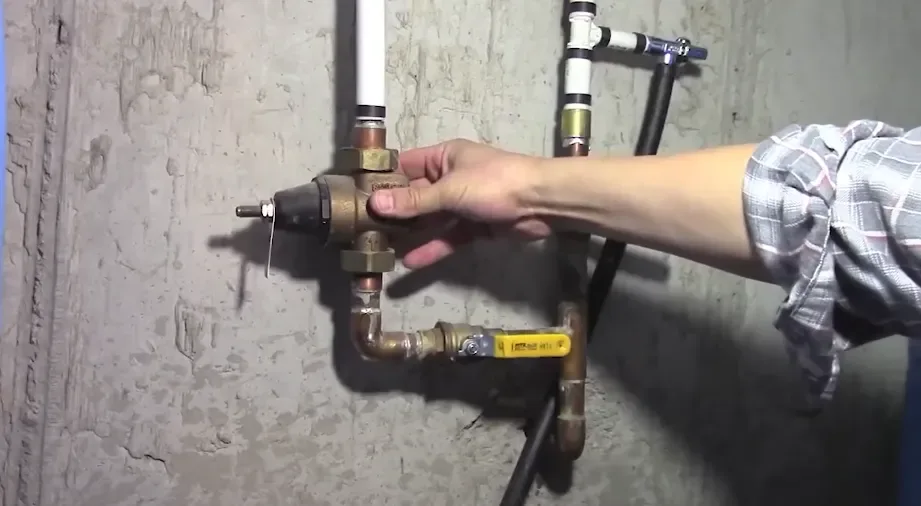
Why earthquake safety plumbing matters in Walnut Creek
The Bay Area is earthquake country, and the biggest plumbing risks in a strong quake are fire from broken gas lines and water damage from broken pipes and toppled water heaters. California's Legislature has said as much: in Health and Safety Code section 19180, it found that areas of the state will experience moderate and severe earthquakes and that fire is a serious threat to life and property after them.
Walnut Creek's housing stock adds to the reason to check. Much of the city was built in the 1950s and 1960s, when the population grew from 9,903 in 1960 to 39,844 in 1970. A lot of those homes still have original galvanized steel water lines, which corrode inside and are more brittle at the threads, and older gas connectors and valves that were never designed with seismic safety in mind. Many owners have lived in their homes for decades, so the plumbing may have never been looked at with an earthquake in mind.
Rossmoor and other condo or co-op buildings bring their own wrinkle. With about 6,676 homes, many in garden-style buildings of two to four units or in mid-rise and high-rise buildings, a failed water heater or broken pipe in one unit can affect the neighbors. Your mutual or homeowners association may already have rules about water heater strapping or seismic valves, so check with your building manager before we schedule.
How to shut off your water and gas
Everyone in the household should know where the main water shutoff and the gas meter shutoff are, and how to close them. Learn it now, while nothing is wrong. Here's how.
Shutting off the water
Your main water shutoff is usually where the water line enters the house, often near the front hose bib, in the garage, or near the water heater. Some homes also have a shutoff at the meter by the street, which belongs to the water utility. If your house valve is a round gate valve, turn it clockwise until it stops. If it's a lever-handle ball valve, a quarter turn closes it: the handle is crosswise to the pipe when it's closed. Old gate valves sometimes won't close fully or break when forced. If yours is stuck, call us. A new ball valve is a simple, worthwhile upgrade.
Shutting off the gas
PG&E says to shut off the gas only if you smell gas, hear gas escaping, see a broken gas line, or suspect a leak. Do not shut it off just because there was an earthquake. To close it, find the main shutoff valve near the gas meter and turn it one-quarter turn in either direction with a wrench. The valve is closed when the tang, the flat part you grip with the wrench, is crosswise to the pipe.
PG&E recommends keeping a 12 to 15 inch adjustable wrench handy and warns that earthquake wrenches with fixed openings may not fit your valve. It also suggests not storing the wrench right at the meter, to prevent tampering.
Water heater strapping in Walnut Creek
California law requires every residential water heater, new, replacement and existing, to be braced, anchored or strapped to resist falling or moving during an earthquake. That's Health and Safety Code section 19211, and it also requires sellers to certify in writing to buyers that the water heater is braced.
A tank-type water heater full of water is heavy and top-heavy. If it shifts in a quake, it can break the gas connector and the water lines at the same time, which is exactly the combination of fire and flooding you're trying to avoid. Proper strapping uses rigid metal straps around the upper and lower portions of the tank, anchored into wall studs or masonry, with the tank sitting snugly so it can't slide or twist.
What we look for on an existing heater
- Straps around both the upper and lower portions of the tank
- Straps anchored into studs or masonry, not just drywall
- No big gap between the tank and wall that lets it rock
- A flexible gas connector in good condition and a working gas shutoff
- Flexible water connectors that can move a little without breaking
- A temperature and pressure relief valve with a discharge line routed safely
Plumber's tape, the thin perforated metal strap, isn't a good substitute for a proper strapping kit. We see it a lot on older installs. If you're selling, buying, or just not sure yours is right, we can check it and fix it. Water heater replacement generally requires a permit, and strapping is part of any heater we install. More on that on our water heater replacement in Walnut Creek page.
Earthquake gas shutoff valves in Walnut Creek
An earthquake-activated gas shutoff valve, also called a seismic gas shutoff valve or earthquake sensitive shutoff valve, closes the gas supply automatically when it senses strong shaking. It's installed on the house side of the gas meter, so gas stops flowing into your home even if nobody is there to close the main valve.
What California law says
Health and Safety Code sections 19180 to 19183 deal with seismic gas shutoff valves. In section 19180, the Legislature found that fire is a serious earthquake threat and that local governments should be authorized to adopt ordinances requiring earthquake sensitive gas shutoff devices. That means whether a valve is required at your address depends on local rules, not a single statewide mandate for every home. PG&E notes that some city or county rules require automatic shutoff devices, typically for new construction, significant alterations and additions, and advises checking with your local agency.
The California Division of the State Architect (DSA) certifies earthquake sensitive shutoff valves for residential structures under those Health and Safety Code sections, and publishes a list of certified valves. PG&E says the valve must be state-certified and installed by a licensed plumbing contractor. DSA also notes that installation of gas valves is under the jurisdiction of local building departments. Inside Walnut Creek city limits, that's the planning and building office at 1666 North Main Street, (925) 943-5800. Unincorporated areas like Saranap go through Contra Costa County.
PG&E does not install or service seismic-actuated or excess flow gas shutoff valves. That's work for a licensed plumber like us.
What to know before you install one
A seismic valve does its job by closing. After it trips, your gas stays off until someone resets it, and every pilot light in the house has to be relit. PG&E notes that a closed automatic device can delay restoring your service. We'll walk you through how your valve resets and when it's safe to do so, and remind you of PG&E's advice not to restore gas yourself after a shutoff if there's any sign of a leak.
We install DSA-certified seismic valves, mount them so they're level and supported, and leak-test the connections. If a permit is needed, we'll tell you.
Seismic valves vs excess flow valves
A seismic valve responds to shaking. An excess flow valve responds to a sudden jump in gas flow, like when a line or appliance connector breaks. They protect against different things, and some homes use both.
DSA also certifies excess flow valves for residential use, under Health and Safety Code sections 19200 to 19204, and keeps a list of certified models. Excess flow valves can be installed at the meter to protect the whole house or at individual appliances like a water heater, dryer or range.
| Device | What triggers it | What it protects against | Where it goes |
|---|---|---|---|
| Earthquake-activated (seismic) gas shutoff valve | Strong shaking | Gas leaks anywhere in the house after a quake, even with no one home | House side of the gas meter |
| Excess flow valve | Gas flow far above normal | A broken line or connector, from a quake or anything else | At the meter or at individual appliances |
| Manual gas shutoff | A person turning it | Lets you stop gas to the house or one appliance | At the meter and at each appliance |
Neither device replaces a manual shutoff, and neither one detects a slow leak. That's why a working manual valve at every gas appliance still matters. See our gas line repair in Walnut Creek page for leak detection and gas pipe repairs.
Backflow prevention devices and check valves
Backflow is water flowing the wrong way, from your property back into the drinking water system. A backflow prevention device or assembly keeps that from happening. Check valves are one-way valves that let water flow forward and close if it tries to reverse.
East Bay MUD describes backflow as the undesired reversal of water flow, caused either by back-siphonage (low supply pressure pulling water backward) or back-pressure (higher pressure on your side than in the supply). Either one can draw water from an irrigation system, a fire sprinkler line, a hose in a bucket or connected equipment back into the pipes you drink from.
When EBMUD may require a backflow preventer
EBMUD inspectors decide case by case. According to EBMUD, a device may be required where a property has a well or auxiliary water source, fire sprinkler or irrigation systems, equipment connected to the drinking water system such as boilers or booster or recirculating pumps, or substances that could create a health hazard. EBMUD says it is the customer's responsibility to install, test, maintain and pay for the assembly, and that only properly certified testers may test backflow preventers. Customers have 30 days from notice to complete installation and testing.
If you're a Contra Costa Water District customer, CCWD has its own requirements, so check with them about your property. Either way, local building permits may be needed for installation.
Simple backflow protection at home
Not every home needs a testable assembly. Hose bib vacuum breakers, the small devices that screw onto an outdoor faucet, are a simple way to keep hose water from siphoning back. We install and replace hose bibs, irrigation backflow devices and check valves as part of our safety work.
Sump pumps, submersible pumps and P-traps
Pumps move water out of places it collects, and traps keep sewer gas out of the house. Both are small parts of a safe plumbing system that are easy to forget until they fail.
Sump pumps
A sump pump sits in a pit at a low point, like a basement, crawl space or below-grade garage, and pumps out groundwater or runoff before it floods. Walnut Creek's winters are mild but can be wet, and homes on hillsides or near creeks can collect water under the house. We install, repair and replace sump pumps and the check valves that keep pumped water from running back into the pit.
Submersible pumps
Submersible pumps sit fully under water and push it up and out. They're used in sumps, wells and other applications where a pump has to work below the water line. We install and replace them and check the discharge piping.
Check valves on pump lines
A check valve on the discharge line keeps water from flowing back down into the pit each time the pump shuts off. A failed check valve makes a pump cycle more often and wear out sooner.
P-traps
Every sink, tub and shower drain has a trap that holds water and blocks sewer gas. A missing, leaking or dried-out trap can let sewer odors into the house. We replace damaged traps and fix incorrect ones.
Sewage ejector pumps and effluent pumps are covered on our sewer line repair page.
Whole-house safety checks
A whole-house safety check is a single visit where we look at the earthquake and safety parts of your plumbing and give you a plain-language list of what's fine, what needs attention, and what to do first. It's a good idea when you buy a home, before you sell, after a moderate quake or simply if you've never had one.
- Call to scheduleCall (925) 887-6347. A real person answers 24/7. Tell us about the house: age, size, water heater type and whether you're in a condo or co-op.
- Arrival windowWe set a time and let you know when the technician is on the way.
- Walk-throughWe check water heater strapping, gas shutoffs and connectors, the main water shutoff, visible piping, traps, pumps and backflow devices. We check visible gas connections for leaks.
- Written findings and priceYou get a written list of what we found and a written price for anything you want fixed. Estimates are free.
- Fixes you chooseWe do the work you approve, such as new straps, valves or connectors, and nothing you didn't.
- Test and show youWe test everything we touched and show you where your shutoffs are and how they work.
For a deeper look, including crawl-under inspections and video inspection of drains, see our whole-house plumbing inspection page.
What affects the cost of earthquake safety work
The price depends on which devices you need, where they go and what we find when we get there. Strapping one accessible water heater is a smaller job than installing a seismic valve and replacing old gas connectors throughout the house. Every job starts with a free written estimate.
- The type and number of devices: straps, seismic valve, excess flow valves, backflow assembly, pumps
- Access to the meter, water heater closet or crawl space
- The condition of the existing gas and water lines and connectors
- Whether a permit is needed
- Whether we're working in a single-family home or a multi-unit building
We offer a senior discount and accept Mastercard and Visa.
Earthquake prep you can do yourself today
Some safety steps don't need a plumber at all. Do these now, and call us for the parts that do.
- Find your main water shutoff and gas meter shutoff, and show everyone in the house
- Keep a 12 to 15 inch adjustable wrench somewhere easy to reach, but not at the meter
- Look at your water heater: are there real straps around the top and bottom of the tank?
- Check that the area around the water heater and gas meter is clear
- Know the PG&E emergency number: 1-800-743-5000
- Run water in unused sinks and showers occasionally so traps don't dry out
Leave gas valve installation, gas connector replacement, backflow testing and anything involving the gas line to a licensed plumber. If you're unsure about something you see, a quick call costs nothing.
Why Walnut Creek trusts us with safety plumbing
We are a family business that has served Contra Costa and Alameda Counties since 1993 from our North Main Street shop. We're a California licensed C-36 plumbing contractor, licensed and insured, open 24/7, and a real person answers. Owner Mo Williams is a Bay Area native and knows the local housing stock well.
We have a 4.7 Google rating from 251 reviews as of October 2026, and we're a member of the Walnut Creek Chamber of Commerce & Visitors Bureau and PHCC, and BBB Accredited A+. If a quake or a broken pipe has already caused trouble, our emergency plumber team is ready day or night.

A family business led by Mo Williams since 1993
We are a Walnut Creek family business run from our North Main Street shop. Owner Mo Williams grew up in the Bay Area and learned plumbing products and installation from the inside out at Simon's Hardware in Walnut Creek and Home Depot in Concord. His wife Ann runs the books as CFO. We're rated 4.7 on Google from 251 reviews (October 2026). Meet Mo


Frequently asked questions
Is a seismic gas shutoff valve required in Walnut Creek?
It depends on local rules. California Health and Safety Code 19180 authorizes local governments to adopt ordinances requiring earthquake sensitive gas shutoff devices, and PG&E notes some cities and counties require them, typically for new construction, significant alterations or additions. Check with the City of Walnut Creek building office at (925) 943-5800, or Contra Costa County for unincorporated areas. Many homeowners choose to install one either way.
Do earthquake gas shutoff valves have to be certified?
Yes. The California Division of the State Architect certifies earthquake sensitive gas shutoff valves for residential structures under Health and Safety Code sections 19180 to 19183 and publishes a list of certified valves. PG&E says a seismic valve must be state-certified and installed by a licensed plumbing contractor. LeapFrog installs certified valves and leak-tests every connection.
Is water heater strapping required in California?
Yes. California Health and Safety Code 19211 requires all new, replacement and existing residential water heaters to be braced, anchored or strapped to resist falling or moving during an earthquake. Sellers must also certify in writing to buyers that the water heater has been braced. Proper straps go around the upper and lower portions of the tank and anchor into studs or masonry.
Should I turn off my gas after an earthquake?
Only if you smell gas, hear gas escaping, see a broken gas line or suspect a leak. That's PG&E's guidance. Use a wrench to turn the valve at the meter a quarter turn so the tang is crosswise to the pipe. Once it's off, don't turn it back on yourself; PG&E or another qualified professional should check the system, restore service and relight pilots.
What's the difference between a seismic valve and an excess flow valve?
A seismic gas shutoff valve closes when it senses strong shaking. An excess flow valve closes when gas flow suddenly jumps far above normal, as when a line or connector breaks. The seismic valve guards against quake damage even when no one is home; the excess flow valve also reacts to breaks with other causes. Neither detects small leaks, so manual shutoffs still matter.
What happens after a seismic gas valve trips?
Gas to the house stays off until the valve is reset, and every pilot light has to be relit. PG&E notes that a closed automatic device can delay restoring your service. Don't reset the valve if you smell gas or suspect damage. PG&E advises having it or another qualified professional check the system and restore service. We'll explain how your valve resets when we install it.
Does my home need a backflow prevention device?
It depends on your property. East Bay MUD decides case by case and may require a backflow preventer where there's a well or auxiliary water source, fire sprinklers, irrigation, or equipment connected to the drinking water, like boilers or booster pumps. Customers must install, test and maintain the device, and only certified testers may test it. CCWD customers should check with CCWD. Simple hose bib vacuum breakers help every home.
Where is my main water shutoff valve?
It's usually where the water line enters the house: near the front hose bib, in the garage, or near the water heater. There's also a valve at the meter near the street that belongs to the utility. A gate valve closes clockwise; a lever ball valve closes with a quarter turn. If yours is stuck or leaks when turned, call us to replace it.
Do you do earthquake safety work in Rossmoor condos?
Yes. We strap water heaters, install seismic gas valves where allowed, and check shutoffs and connectors in Rossmoor and other Walnut Creek condos and co-ops. Because many buildings share plumbing and gas systems between units, check with your mutual or building manager about any rules before we schedule. We offer free estimates and a senior discount.
What is included in a whole-house safety check?
We check water heater strapping, gas shutoffs and connectors, the main water shutoff, visible piping, traps, sump or submersible pumps and backflow devices, and check visible gas connections for leaks. You get a written list of findings and a written price for any repairs before we do any work. Call (925) 887-6347 to schedule.
Other ways we help Walnut Creek homes
Call a Walnut Creek plumber for earthquake & safety plumbing
A real person answers 24 hours a day, 7 days a week. Tell us what's happening and we'll give you an honest arrival window and a free written estimate before any work starts.
Call now, day or night
(925) 887-6347- Licensed plumber, not a salesperson
- Free written estimate before work begins
- Senior discount, ask when you call
- Mastercard and Visa accepted
- Non-urgent questions: balzaparis@gmail.com
Water or sewage spreading? Shut off the fixture or main valve, then call. Smell gas? Leave first and call PG&E at 1-800-743-5000 or 911 from outside.
2108 N. Main Street, Suite F
Walnut Creek, CA 94596
Phone: (925) 887-6347
Email: balzaparis@gmail.com
Open 24 hours, 7 days a week