Gas Line Repair and Installation in Walnut Creek, CA
If you smell gas, leave the house and call PG&E at 1-800-743-5000 or 911 from outside. For everything after that, we handle gas line repair in Walnut Creek on your side of the meter: leak detection, new gas line installation for ranges, cooktops, ovens and dryers, electric to gas conversions, seismic shutoff and excess flow valves, buried poly-pipe and propane lines. We are a family business on North Main Street, licensed and insured, open 24/7, and a real person answers. Estimates are free.
- Open 24 hours, including holidays
- Licensed and insured since 1993
- Written price before any work starts
- Senior discount available
Gas line repair in Walnut Creek: what we handle
We repair, replace and install the gas piping on your side of the PG&E meter, from the meter to every appliance in the house and yard. That covers leak detection, new gas runs for kitchens and laundry rooms, electric to gas conversions, seismic and excess flow valves, and buried poly-pipe for outdoor equipment.
Gas work is not where you want guesswork. A loose flare fitting behind a dryer or a corroded buried line under a patio can leak for months before anyone notices the smell. We find the problem, explain it in plain words, and give you a written price before we touch anything.
Leak detection and repair
We pressure test the system, check joints and appliance connectors, and track a leak down to the fitting or section of pipe that is failing. Then we repair or replace only what needs it.
Gas line installation
New runs of black iron or other approved pipe for a range, cooktop, wall oven, dryer, furnace, water heater or fireplace. We size the line for the total load of every appliance on it, not just the new one.
Appliance hookups
Cooktop gas hookups, oven and stove gas lines, dryer gas hookups and general gas appliance installation, with a proper shutoff valve at each appliance and a leak test when we finish.
Electric to gas conversions
Switching a kitchen or laundry from electric to gas means running a new branch, adding a shutoff and making sure the existing piping can carry the extra demand. We check that before you buy the appliance.
Seismic and excess flow valves
Earthquake-activated gas shutoff valves close on strong shaking. Excess flow valves close when gas flow jumps, as it would from a broken line. We install both on the customer side of the meter.
Poly-pipe and propane
Buried polyethylene gas pipe for runs out to a BBQ, fire pit or pool heater, plus propane line installation and repair for homes and outbuildings that run on a tank.
We also handle whole-house gas re-piping when an older system has too many patches, undersized branches or corroded sections to keep chasing. If your project is mostly outside, see our page on outdoor gas plumbing for BBQs, fire pits and pool heaters.
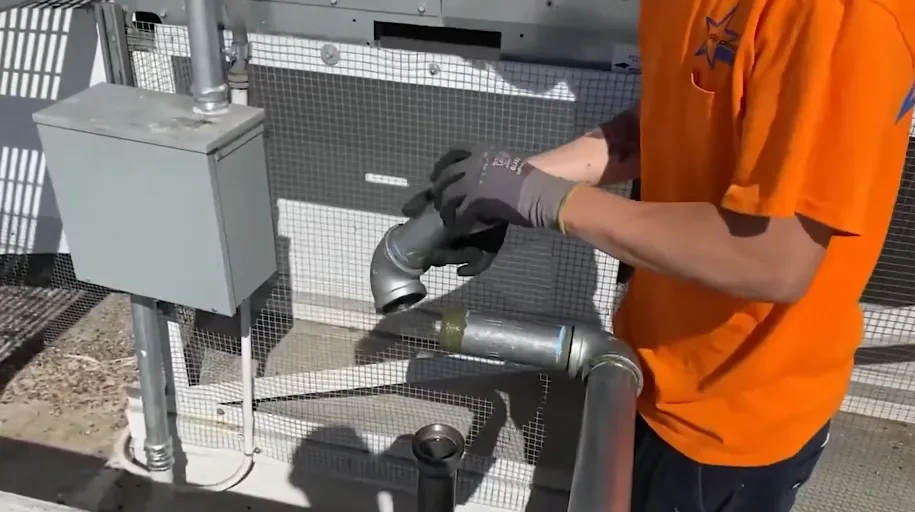
If you smell gas right now
Leave the house first, then call. Do not flip switches, light anything or use a phone inside, and call PG&E at 1-800-743-5000 or 911 from outside and away from the building.
The California Public Utilities Commission lists the signs to watch for. You may notice one or several:
- The rotten egg smell that is added to natural gas so leaks can be noticed.
- A hissing sound, which can range from a quiet hiss to a loud roar depending on the size of the leak.
- Dirt or water blowing into the air, or bubbles rising in standing water or a puddle over a buried line.
- A patch of plants or lawn that has died for no clear reason along the path of a buried pipe.
- A damaged or kinked connector behind a range, dryer or water heater.
The CPUC also says not to try to stop a leak or put out a gas fire yourself. That job belongs to the utility and the fire department. Our job starts after the area is safe.
PG&E or plumber: who is responsible for which gas pipe?
PG&E owns and maintains the service line and the meter. You own everything after the meter. PG&E's own safety notices say customers are responsible for all piping and equipment on their side of the meter, including above-ground and buried lines running to any gas appliance.
That split matters more than most homeowners realize. If your gas line runs underground from the meter on the side yard to a detached garage, a pool heater or a backyard BBQ, that buried pipe is yours to maintain. PG&E recommends having customer-owned gas lines inspected periodically for leaks and corrosion, and says they should be repaired right away if corrosion or another unsafe condition is found.
| Part of the system | Who handles it | Who to call |
|---|---|---|
| Gas main in the street and the service line to your meter | PG&E | PG&E |
| The gas meter and regulator | PG&E | PG&E |
| Piping from the meter into the house | Property owner | A licensed plumber |
| Buried lines to garages, pool heaters, fire pits, BBQs | Property owner | A licensed plumber |
| Shutoff valves, connectors and appliance hookups | Property owner | A licensed plumber |
| Excess flow valve on the PG&E service line (by request) | PG&E installs, customer pays | PG&E Building and Renovation Service Center |
PG&E also offers excess flow valves on the utility service line itself, paid for by the customer, and some service lines are not eligible. That is a separate thing from the excess flow valve a plumber installs on your house piping after the meter. We can explain which one fits your situation when you call.
Signs your gas piping needs attention
Most gas problems show up as a smell, a weak flame, an appliance that won't stay lit, or a failed inspection during a remodel or sale. Here is what those symptoms usually point to and how fast to act.
| What you notice | What it often means | How urgent |
|---|---|---|
| Rotten egg smell indoors or at the meter | A leak at a fitting, valve, connector or pipe | Emergency: leave, call PG&E or 911 first |
| Faint smell only near one appliance | Loose connector or worn shutoff at that appliance | Same day: turn the appliance valve off and call |
| Burners lazy or yellow when other appliances run | Undersized piping for the total load | Soon: get it checked before adding appliances |
| Dead strip of lawn or bubbling puddle over a buried line | Leak in buried customer-owned pipe | Urgent: call PG&E, then a plumber |
| Rust and flaking on exposed gas pipe | Corrosion, often near soil or a damp crawlspace | Soon: inspection and likely section replacement |
| Old flexible connector with no visible coating | An older style connector that should be replaced | Plan it: replace when you service the appliance |
If an appliance smells of gas but the house doesn't, you can usually turn the shutoff valve at that appliance a quarter turn so the handle sits across the pipe. Then call. If you are not sure the smell is limited to one spot, treat it as a leak and get outside.
Why gas lines fail in Walnut Creek homes
Age, soil and earthquakes. Walnut Creek grew from under 10,000 residents in 1960 to nearly 40,000 by 1970, so many local homes still have mid-century gas piping, often with decades of add-ons layered on top.
In mid-century neighborhoods like Parkmead, Walnut Heights, Larkey Park and Rancho Paraiso it is common to find original steel gas runs in crawlspaces that have been extended for a newer furnace, a bigger range and a gas dryer, one at a time, without anyone checking whether the old main branch can still carry the load. The result is a range that loses flame when the furnace kicks on. That is a sizing problem, not a bad burner.
Buried lines are the other story. Plenty of homes near the open space at Shell Ridge, Lime Ridge and the Acalanes Ridge have long runs out to a pool equipment pad or a detached studio. Steel pipe in damp soil corrodes from the outside in. Because that pipe is on your side of the meter, it is your responsibility, and it usually gets checked only when something smells or dies in the lawn.
Then there is shaking. A rigid gas connection to a water heater that is not strapped can twist or snap in a quake. Strapping water heaters is required in California, and seismic gas shutoff valves add another layer. More on that in our earthquake safety plumbing page.
Some homes in Saranap and other unincorporated pockets fall under Contra Costa County for permits instead of the City of Walnut Creek. We sort that out at the estimate so the right office inspects the work.
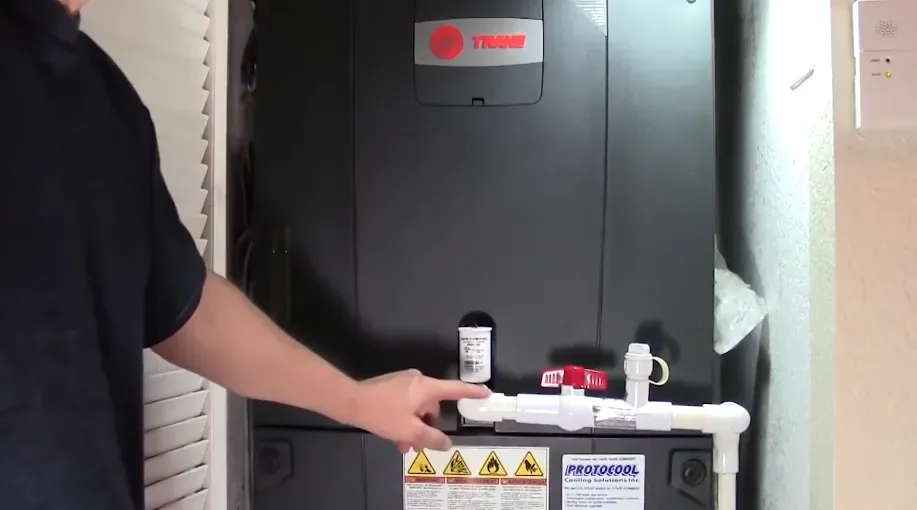
How we handle a gas line repair or installation
A gas job follows the same order every time: make it safe, find the cause, price it in writing, do the work, and prove it is tight before the gas goes back on.
- You call, a person answersWe are open 24/7. Tell us what you smell, see or want installed, and we will give you safety steps on the phone if needed and set up a visit.
- Arrival and safety checkWe confirm the area is safe, look at the meter, the main shutoff and each appliance valve, and note the pipe material and age.
- Diagnosis and testingFor leaks we pressure test the system and check joints with leak detection solution or an electronic detector. For new work we total up appliance demand to size the pipe.
- Written price before workYou get the scope and price in writing. Estimates are free, and seniors get a discount. If a permit is needed we tell you up front.
- The repair or installWe replace failed fittings, connectors or sections, run new pipe where needed, and add proper shutoff valves at each appliance.
- Pressure test, relight, clean upWe test the piping, restore gas, relight pilots where needed, check every appliance burns cleanly, and leave the work area clean.
Repair, replace or re-pipe: comparing gas line options
Small leaks at a fitting or connector are usually a repair. Corroded, undersized or heavily patched systems are better off with a section replacement or a re-pipe. Here is how we think about it.
| Option | Best for | Trade-offs |
|---|---|---|
| Fitting or connector repair | A single leaking joint, valve or appliance connector | Quickest fix; does not address age of the rest of the system |
| Section replacement | A corroded stretch, often under a house or at a wall penetration | Targets the worst pipe; other old sections remain |
| New branch line | Adding a cooktop, oven, dryer or electric to gas conversion | Needs the main branch checked for capacity first |
| Buried poly-pipe run | Outdoor lines to a BBQ, fire pit, pool heater or outbuilding | Does not rust; must be buried and transitioned to metal above ground |
| Whole-house gas re-piping | Undersized, corroded or patchwork systems in older homes | Bigger project; solves capacity and age problems at once |
Poly-pipe, the yellow polyethylene gas pipe, is a good fit underground because it doesn't corrode, but it is meant for burial only. Where it comes up out of the soil it transitions to a metal riser. When we replace a corroded buried steel line, this is often what goes in.
Seismic gas shutoff valves and excess flow valves
Both valves cut off gas automatically, but for different reasons: a seismic valve closes on strong ground shaking, and an excess flow valve closes when gas flow suddenly jumps, as it would from a broken pipe or connector.
Earthquake-activated shutoff
Mounts on your house piping just after the meter. When it trips, gas to the whole building stops. After a quake it must be reset by hand, and the piping and appliances should be checked before the gas comes back on. California's Division of the State Architect certifies these valves, so we install certified models.
Excess flow valve
Responds to a flow rate higher than the system should ever see, like a severed line or a connector torn off an appliance. It does not react to shaking alone. Some are installed on the house piping and some at individual appliances.
Whether a valve is required depends on where you live and what you are building. Some nearby cities, Danville for example, require approved gas shutoff valves when building permits pass a set value. Other cities only require them in certain cases or not at all. We check with the City of Walnut Creek or Contra Costa County for your address before we quote, so you know whether the valve is a requirement or an upgrade you are choosing.
Permits, codes and safety for gas work
New gas piping, appliance conversions and re-pipes generally need a permit and an inspection, which usually includes a pressure test. Inside city limits that runs through the City of Walnut Creek planning and building office on North Main Street, (925) 943-5800. Unincorporated areas use Contra Costa County.
- Gas piping is work for a California licensed C-36 plumbing contractor. You can check any contractor's license, bond and workers' comp at cslb.ca.gov.
- Every appliance should have its own accessible shutoff valve.
- Water heaters in California must be braced, anchored or strapped against earthquake motion, and sellers must certify this in writing to buyers.
- Before digging a trench for a buried gas line, call 811 or visit california811.org at least two working days ahead so utilities are marked. PG&E names digging as the most common cause of damage to underground pipelines.
- Changes that add a gas appliance near bedrooms or in tight spaces need correct venting and combustion air. We flag that before work starts.
Regional air rules are also shifting how people think about gas water heaters. If a water heater is part of your gas project, read our water heater page for the current status before you choose a replacement.
What affects the cost of gas line work
The price depends on how much pipe, how hard it is to reach, and whether a permit and inspection are involved. We give a firm written price after we look, and the estimate is free.
Things that raise the price
Long runs, crawlspaces with little clearance, finished walls or ceilings that must be opened, trenching through hardscape, upsizing an undersized main branch, and adding seismic or excess flow valves.
Things that keep it simple
Short runs from existing piping, open basements or garages, appliance valves already in place, and combining several gas tasks into one visit and one permit.
One tip: if you are remodeling a kitchen and also want a gas dryer or a backyard BBQ line, bundle it. One crew, one permit and one inspection usually beats three separate jobs. And ask about the senior discount when you call.
Rossmoor, condos and HOA communities
In Rossmoor and other shared buildings, the first question is who owns the pipe. Many Rossmoor homes are co-ops and condos in a community managed by the nonprofit Golden Rain Foundation, so gas piping inside your unit and piping in common areas may be handled differently.
Before we quote a cooktop hookup or a dryer conversion in a garden-style duplex or a mid-rise unit, we ask you to check with your association about approvals and which piping is yours. In shared buildings a gas shutoff can affect neighbors, so timing the work matters too. The same goes for condo buildings around downtown and near the Walnut Creek BART station. We plan the work around those rules.
Gas safety tips you can do yourself
Homeowners can safely learn where the shutoffs are and keep an eye on connectors. Anything that involves loosening, tightening or cutting gas pipe should be left to a licensed plumber.
- Find your main gas shutoff at the meter and keep a wrench near it. Only turn it off if you smell gas or suspect a leak, because PG&E or a qualified pro has to restore service and relight pilots.
- Know the shutoff valve at each appliance: range, dryer, water heater, furnace, fireplace.
- When you pull out a dryer or range, check the flexible connector for kinks, cracks or crushing. Do not reuse old connectors when you swap appliances.
- Watch for yellow, floppy burner flames, soot or a lingering smell, and call if you see them.
- Call 811 before you dig for fence posts, trees or irrigation, especially if a gas line runs to the backyard.
- Strap your water heater and consider a seismic shutoff valve before the next quake, not after.
Why Walnut Creek calls us for gas lines
We are a family plumbing company that has served Contra Costa and Alameda Counties since 1993, working out of our North Main Street shop. Owner Mo Williams is a Bay Area native who learned plumbing and construction products and installation right here at Simon's Hardware in Walnut Creek and at Home Depot in Concord.
We are members of the Walnut Creek Chamber of Commerce & Visitors Bureau and PHCC, and BBB Accredited with an A+ rating. We take Mastercard and Visa. Most of all, we explain gas work clearly, because you should understand what is running through your walls.
Related plumbing services
Gas work often ties into other projects. These pages cover the jobs we see most often alongside it.
Kitchen plumbing
Range and cooktop installs, pot fillers and sink work. See kitchen plumbing in Walnut Creek.
Outdoor gas and water
BBQ, fire pit and pool heater lines. See outdoor gas plumbing.
Emergency service
Burst pipes, sewer backups and anything that can't wait. See our 24/7 emergency plumber page or go back to the home page.

A family business led by Mo Williams since 1993
We are a Walnut Creek family business run from our North Main Street shop. Owner Mo Williams grew up in the Bay Area and learned plumbing products and installation from the inside out at Simon's Hardware in Walnut Creek and Home Depot in Concord. His wife Ann runs the books as CFO. We're rated 4.7 on Google from 251 reviews (October 2026). Meet Mo


Frequently asked questions
Is a gas leak in my house PG&E's job or a plumber's?
It depends on where the leak is. PG&E owns the service line and meter, and you own all piping and equipment after the meter, including buried lines to garages or pool heaters. If you smell gas, leave and call PG&E or 911 first. Once PG&E makes it safe and finds the leak is on your side, a licensed plumber like LeapFrog makes the repair.
What should I do if I smell gas in my Walnut Creek home?
Leave the house right away and call PG&E at 1-800-743-5000 or 911 from outside. Do not turn lights or appliances on or off, light matches, use a phone inside, or start a car in the garage. Do not try to find or stop the leak yourself. After the utility clears the area, call us to repair the customer-side piping.
How do I know if a buried gas line is leaking?
Common signs are a rotten egg smell outdoors, a hissing sound, bubbles in a puddle, dirt blowing up from the ground, or a strip of dead grass or plants along the pipe's path. Treat any of these as a leak: move away and call PG&E or 911. We can then pressure test and replace the buried line, often with poly-pipe.
Can you convert my electric stove or dryer to gas?
Yes. An electric to gas conversion means running a new gas branch to the appliance, adding a shutoff valve and confirming the existing piping can supply the extra demand along with your furnace and water heater. We check capacity first, give you a written price, and handle permits where required. Call before you buy the appliance so the hookup matches.
Do I need a seismic gas shutoff valve in Walnut Creek?
It depends on your address and project. Some cities require approved earthquake gas shutoff valves when permit work passes a set value, while others treat them as optional. We check the current rule with the City of Walnut Creek or Contra Costa County for your home. Even when optional, many homeowners add one for protection after a strong quake.
What is the difference between a seismic valve and an excess flow valve?
A seismic valve closes when strong ground shaking hits and must be reset by hand afterward. An excess flow valve closes when gas flow jumps far above normal, as from a broken pipe or a connector torn off an appliance, and does not react to shaking alone. We install both on the house side of the PG&E meter.
How long does a gas line repair take?
A single leaking fitting or connector is often fixed in one visit. Replacing a corroded section, adding a new appliance line or re-piping takes longer, and permit inspections add scheduling time. We give you a realistic timeline with the written estimate after we see the job, and we keep you posted if anything changes once the walls or crawlspace are open.
Do gas line jobs need a permit in Walnut Creek?
New gas piping, conversions and re-pipes generally need a permit and inspection, usually including a pressure test. Inside city limits that goes through the City of Walnut Creek building office at (925) 943-5800, and unincorporated areas like Saranap use Contra Costa County. We tell you during the estimate whether your job needs one and pull it.
Do you work on propane lines?
Yes. We install and repair propane lines for homes, outbuildings, BBQs and other equipment that run on a tank. Propane and natural gas appliances are set up differently, so we confirm the appliance is configured for the fuel you have. If you are switching an appliance from propane to natural gas or back, call us to talk it through.
How much does gas line repair cost?
The cost depends on the length of pipe, access, whether walls or hardscape must be opened, valve upgrades, and permits. We do not quote blind over the phone because two leaks that look alike can be very different jobs. We look first and give you a free written estimate, and seniors receive a discount.
Other ways we help Walnut Creek homes
Call a Walnut Creek plumber for gas lines & piping
A real person answers 24 hours a day, 7 days a week. Tell us what's happening and we'll give you an honest arrival window and a free written estimate before any work starts.
Call now, day or night
(925) 887-6347- Licensed plumber, not a salesperson
- Free written estimate before work begins
- Senior discount, ask when you call
- Mastercard and Visa accepted
- Non-urgent questions: balzaparis@gmail.com
Water or sewage spreading? Shut off the fixture or main valve, then call. Smell gas? Leave first and call PG&E at 1-800-743-5000 or 911 from outside.
2108 N. Main Street, Suite F
Walnut Creek, CA 94596
Phone: (925) 887-6347
Email: balzaparis@gmail.com
Open 24 hours, 7 days a week